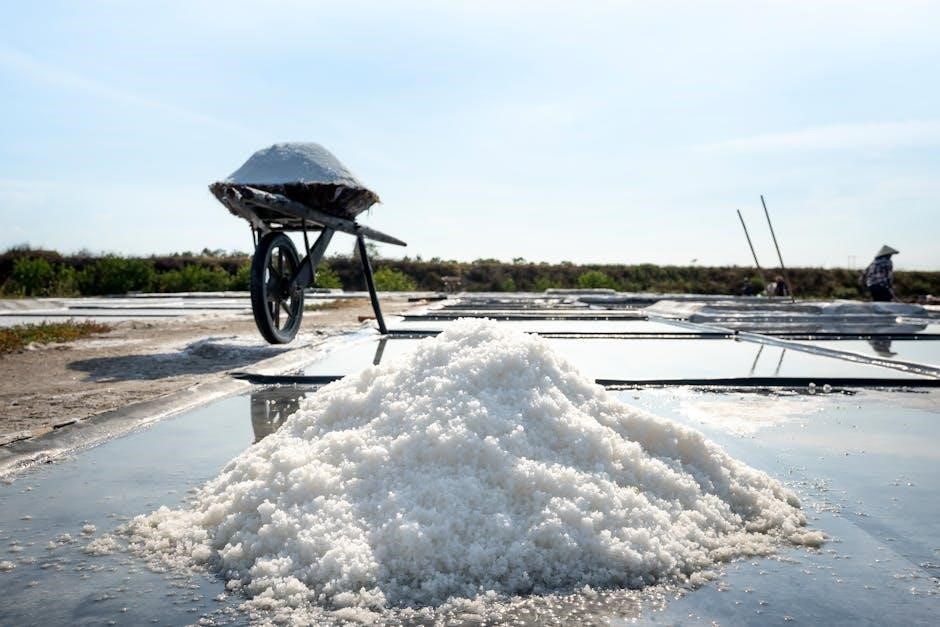
Hot springs showcase diverse compositions, influenced by geological settings and fluid interactions; this manual details analyzing these systems, from water chemistry to diatom analysis.
Overview of Thermal Springs
Thermal springs, fascinating geological features, emerge when geothermally heated groundwater rises to the surface. These systems exhibit a wide range of chemical compositions, varying from freshwater to highly saline, depending on the source and pathway of the water. The presence of diatoms, silicoflagellates, and specific species like Eunotia exigua indicates lagoon influence and varying pH levels.
Understanding their formation—intra-caldera, caldera-rim, or extra-caldera—is crucial, alongside recognizing compositional types like alkaline-chloride or acid-chloride-sulfate. Long-term stability relies on connections to meteoric aquifers and crustal fluids.
Geological Context and Formation
Hot spring formation is intrinsically linked to geological settings – calderas being prime locations. Deep circulation of atmospheric precipitation within local heat flow systems interacts with crustal rocks, influencing water chemistry. The 87Sr/86Sr ratio reveals weathering sources, distinguishing between carbonate, silicate, and mixed influences.
These springs can be intra-caldera, rim-based, or extra-caldera, each reflecting differing degrees of connection to thermal waters and shallow aquifers, impacting their long-term stability;

Water Chemistry of Hot Springs
Water chemistry analysis, including major ions, trace elements, and isotopic ratios (like 87Sr/86Sr), reveals water-rock interactions and fluid sources.
Major Ion Composition
Major ion composition – including sodium, potassium, calcium, magnesium, chloride, sulfate, and bicarbonate – fundamentally defines hot spring water types. These ions originate from atmospheric inputs, dissolution of surrounding rocks, and magmatic contributions. Analyzing their concentrations helps classify springs as alkaline-chloride, mixed-alkaline chloride, acid-chloride-sulfate, or travertine-precipitating. Variations reflect differing water-rock interaction intensities and fluid mixing ratios. Understanding these proportions is crucial for tracing fluid pathways and assessing the degree of connectedness to deep crustal fluids versus shallow meteoric sources, providing insights into system dynamics.
Trace Element Analysis & Water-Rock Interaction
Trace element analysis reveals the influence of geothermal activity and water-rock interaction. Element concentrations in geothermal waters correlate with mineral composition and rock properties, indicating the degree of interaction. For example, strontium isotope ratios (87Sr/86Sr) differentiate between carbonate and silicate weathering sources. Elevated levels suggest prolonged contact with crustal rocks during deep circulation. This analysis, combined with major ion data, helps reconstruct fluid pathways and assess the source contributions to the hot spring system’s unique chemical signature.
Strontium Isotopes (87Sr/86Sr) and Weathering Sources
Strontium isotope ratios (87Sr/86Sr) are crucial for tracing weathering sources contributing to hot spring waters. Carbonate weathering yields ratios around 0.7080, while silicate weathering ranges from 0.7160 to 0.7200. Deviations from these values indicate mixing or interaction with specific Sr-bearing rocks. Analyzing these ratios, alongside water chemistry, helps determine the relative contributions of different weathering processes and the extent of crustal fluid interaction within the local heat flow system.
pH Levels and Their Significance
pH measurements are fundamental in hot spring analysis, reflecting water-rock interaction and biological activity. Dachnie thermal springs exhibit a wide pH range (3.2-9.4) at temperatures of 30.0-50.0°C. Low pH often indicates increased acidity from volcanic gases or sulfide oxidation. Specific diatom species, like Eunotia exigua, thrive in acidic conditions, serving as bioindicators. pH influences mineral solubility and dictates the types of microbial communities present, impacting overall system chemistry.

Biological Components of Hot Springs
Diatom flora, including 278 species, and silicoflagellates reveal lagoon influence and ecological groups, aiding in understanding hot spring sediment formation and history.
Diatom Flora and Ecological Groups
Diatom analysis is crucial for characterizing hot spring ecosystems. A comprehensive study identified 278 species and varieties across 99 genera, revealing distinct ecological groupings. These groups reflect varying tolerances to temperature, pH, and salinity. The presence of marine and brackish-water diatom species, alongside silicoflagellates, strongly suggests significant influence from lagoonal waters during sediment deposition. This indicates a complex interplay between freshwater, geothermal fluids, and coastal environments within these unique habitats. Detailed taxonomic references and micrographs of 170 diatom taxa and 3 silicoflagellate taxa are available for precise identification.
Specific Diatom Species Indicators (Eunotia exigua, Frustulia krammeri, Caloneis lancettula, Neidium dubium)
Certain diatom species serve as valuable indicators of specific hot spring conditions. Eunotia exigua, Frustulia krammeri, Caloneis lancettula, and Neidium dubium were consistently found in the Dachnie thermal springs, thriving within a temperature range of 30.0-50.0°C and a pH of 3.2-9.4. Eunotia exigua, in particular, is commonly associated with hot springs exhibiting low pH levels. Their presence aids in reconstructing past environmental conditions and assessing water source contributions.
Silicoflagellates as Indicators of Lagoon Influence
Silicoflagellates, microscopic marine algae, are crucial indicators of lagoon water influence within hot spring systems. The presence of these organisms, alongside abundant marine and brackish-water diatom species, suggests significant mixing with lagoonal waters during sediment formation. An Atlas documenting 170 diatom taxa and 3 silicoflagellate taxa provides a reference for identification. Analyzing silicoflagellate abundance helps determine the extent of saltwater intrusion and reconstruct paleoenvironmental conditions.
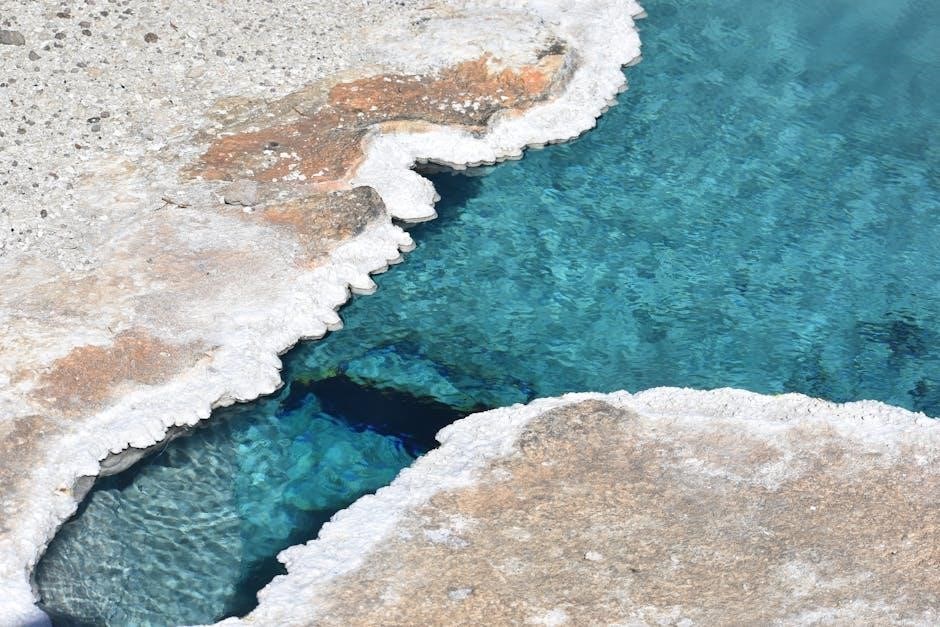
Types of Hot Spring Systems
Hot spring systems are categorized into intra-caldera, caldera-rim, and extra-caldera types, each exhibiting unique compositional characteristics and fluid source connections.
Intra-Caldera Hot Springs
Intra-caldera hot springs reside within the collapsed structure of a volcano, directly tapping into the substantial heat source below. These systems often display a strong connection to deep, primary thermal waters, exhibiting higher temperatures and more pronounced geochemical signatures. Analysis reveals varying compositions – alkaline-chloride, mixed-alkaline chloride, and acid-chloride-sulfate – reflecting diverse water-rock interactions.
The degree of connectedness to shallow meteoric aquifers and other crustal fluids significantly influences their chemical makeup. Studying these springs provides insights into the hydrothermal system’s core processes and long-term stability.
Caldera-Rim Hot Springs
Caldera-rim hot springs emerge along the edges of volcanic calderas, representing a transition zone between deep thermal fluids and shallower groundwater systems. These springs often exhibit a mixed composition, influenced by both primary thermal waters and circulating meteoric water. Their analysis reveals a degree of connectedness to both deep and shallow fluid sources.
They can display alkaline-chloride or mixed-alkaline chloride chemistries, reflecting this interaction. Studying these springs helps delineate the pathways of fluid flow and assess the overall hydrothermal system’s dynamics and stability.
Extra-Caldera Hot Springs
Extra-caldera hot springs are found outside the immediate caldera structure, often representing the furthest extent of the hydrothermal system’s influence. These springs typically demonstrate a greater degree of mixing with shallow meteoric aquifers, resulting in compositions that are less directly linked to deep thermal sources.
They can range in type, including acid-chloride-sulfate or even travertine-precipitating varieties, depending on local geological conditions. Analyzing these springs provides insights into the broader regional hydrothermal network and fluid pathways.
Factors Influencing Hot Spring Composition
Composition is shaped by deep precipitation circulation, heat flow, crustal fluid interaction, and mineral properties—all impacting water-rock interactions and final chemistry.
Deep Circulation of Atmospheric Precipitation
Atmospheric precipitation, infiltrating deep into the crust, plays a crucial role in hot spring water composition. This downward percolation interacts with surrounding rocks, dissolving minerals and acquiring distinct chemical signatures. The strontium isotope ratios (87Sr/86Sr) reveal sources; carbonate weathering yields ~0.7080, while silicate ranges 0.7160-0.7200.
Most springs exhibit interaction with Sr-bearing rocks during this deep circulation within local heat flow systems, influencing their overall chemistry and reflecting water-rock interaction processes.
Heat Flow Systems and Crustal Fluid Interaction
Heat flow systems drive hydrothermal circulation, bringing deeply sourced fluids to the surface. These fluids interact extensively with the crust, impacting hot spring composition. Trace element content in geothermal waters directly correlates with mineral composition, rock properties, and geothermal activity, reflecting the degree of water-rock interaction.
The springs’ connectedness to primary thermal waters, shallow meteoric aquifers, and other crustal fluids determines their compositional type – alkaline-chloride, acid-chloride-sulfate, or travertine-precipitating.
Mineral Composition and Rock Properties
Mineral composition and rock properties profoundly influence hot spring water chemistry. The 87Sr/86Sr ratio distinguishes between carbonate/silicate weathering sources, revealing interaction with Sr-bearing rocks during deep circulation. Silicate weathering is evident in some springs, while others show a blend of carbonate and silicate influences.
Trace element content directly reflects these interactions, providing insights into the geothermal system’s dynamics and the degree of water-rock exchange.
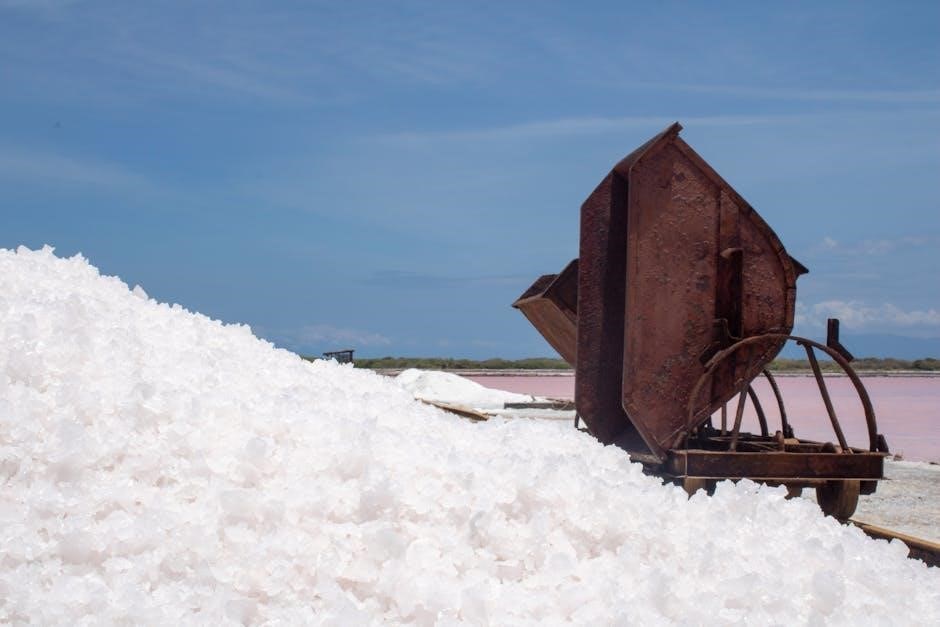
Hot Spring System Stability
Hot spring stability relies on long-term hydrothermal processes and connections to meteoric aquifers, influencing fluid sources and overall system endurance.
Long-Term Stability in Hydrothermal Systems
Hydrothermal systems, like those producing hot springs, demonstrate remarkable long-term stability, often persisting for centuries or millennia. This endurance isn’t simply due to constant heat input, but a complex interplay between deep fluid sources and shallow meteoric water recharge. The Yellowstone system exemplifies this, showcasing consistent thermal activity. Understanding the degree of connectedness between primary thermal waters, shallow aquifers, and crustal fluids is crucial for predicting system behavior. Variations in strontium isotope ratios (87Sr/86Sr) and trace element compositions provide insights into these fluid interactions and weathering sources, helping assess long-term viability.
Connection to Meteoric Aquifers
Meteoric water, originating from atmospheric precipitation, significantly influences hot spring systems. Deep circulation of this water through fractured rocks interacts with the crust, acquiring heat and dissolved minerals. The degree of mixing between this meteoric component and deeper, primary thermal fluids dictates the spring’s chemistry. Springs exhibiting a stronger connection to shallow aquifers often display lower temperatures and altered ion compositions. Analyzing strontium isotope ratios (87Sr/86Sr) helps delineate the contribution of meteoric sources, alongside detailed water chemistry assessments.
Hot Spring Classification Based on Composition
Hot springs are categorized by their dominant ion chemistry – alkaline-chloride, mixed-alkaline chloride, acid-chloride-sulfate, or travertine-precipitating – reflecting fluid sources.
Alkaline-Chloride Hot Springs
Alkaline-chloride hot springs typically exhibit high pH values and elevated chloride concentrations, originating from deep circulation of meteoric water interacting with crustal rocks.
These systems demonstrate a degree of connectedness to primary thermal waters, yet also show influence from shallower meteoric aquifers.
The strontium isotope ratios (87Sr/86Sr) suggest interaction with both carbonate and silicate weathering sources, indicating complex water-rock interactions.
Trace element analysis reveals insights into mineral composition and geothermal activity, reflecting the extent of these interactions within the local heat flow system.
Mixed-Alkaline Chloride Hot Springs
Mixed-alkaline chloride hot springs represent an intermediate composition, displaying characteristics of both alkaline-chloride and other types. These systems exhibit a blended influence from primary thermal waters, shallow meteoric sources, and diverse crustal fluids.
Strontium isotope analysis reveals a complex interplay between carbonate and silicate mineral weathering, indicating varied Sr-bearing rock interactions.
Diatom flora, including species like Eunotia exigua, can indicate temperature ranges and pH levels, reflecting the mixing of different water sources within the system.
Acid-Chloride-Sulfate Hot Springs
Acid-chloride-sulfate hot springs are characterized by low pH levels and elevated concentrations of chloride and sulfate ions. These systems often result from intense water-rock interaction with sulfur-bearing minerals, leading to acidic conditions.
Diatom analysis reveals a limited flora adapted to these extreme environments, with species tolerance varying with pH.
The strontium isotope ratios suggest significant contributions from altered volcanic rocks, reflecting deep circulation within the local heat flow system.
Travertine-Precipitating Hot Springs
Travertine-precipitating hot springs are distinguished by the deposition of calcium carbonate (travertine) due to elevated temperatures and carbon dioxide degassing. These springs often exhibit alkaline pH and moderate to high concentrations of calcium and bicarbonate ions.
Diatom assemblages are typically less diverse, influenced by the high alkalinity and mineral precipitation.
Strontium isotope data can help trace the source of calcium, potentially linking it to carbonate-rich crustal rocks and meteoric water interaction.

Temperature and its Impact
Temperature profoundly affects solubility and biological life; Dachnie springs host specific diatoms (Eunotia exigua) at 30.0-50.0°C and pH 3.2-9.4.
Temperature Ranges and Biological Adaptations
Hot spring temperatures dictate the types of life present, demanding unique adaptations. The Dachnie thermal springs, for instance, support specific diatom species – Eunotia exigua, Frustulia krammeri, Caloneis lancettula, and Neidium dubium – within a temperature range of 30.0 to 50.0°C.
These organisms thrive despite pH levels varying from 3.2 to 9.4, showcasing remarkable resilience. Understanding these thermal boundaries and the corresponding biological communities is crucial for assessing ecosystem health and identifying potential indicators of environmental change within these extreme habitats.
Temperature’s Effect on Chemical Solubility
Temperature significantly influences the solubility of minerals within hot spring systems. Elevated temperatures generally increase the solubility of many compounds, leading to higher concentrations of dissolved ions in the geothermal waters. This impacts the overall water chemistry and contributes to the formation of unique mineral precipitates.
The interaction between temperature, mineral composition, and rock properties directly affects the degree of water-rock interaction, shaping the distinctive chemical signatures observed in these hydrothermal environments.
Manual for Hot Spring System Analysis
This manual outlines protocols for comprehensive hot spring analysis, encompassing water chemistry sampling, microscopic diatom/silicoflagellate studies, and strontium isotope techniques.
Sampling Protocols for Water Chemistry
Water samples require meticulous collection in pre-cleaned bottles, ensuring minimal contamination. Record precise location data (GPS coordinates), temperature, and flow rate at each site. Filter samples in situ using 0.45 μm filters for major ion and trace element analysis. Preserve samples with appropriate acids (e.g., HNO3) for cation analysis and refrigerate for anion measurements.
Multiple samples should be collected over time to account for temporal variations. Analyze for pH, conductivity, and alkalinity immediately after collection. Strict adherence to quality control/quality assurance (QA/QC) procedures is crucial for reliable data interpretation, correlating chemistry with geological context.
Microscopic Analysis of Diatom and Silicoflagellate Samples
Prepare samples by carefully digesting organic matter and mounting a known volume onto microscope slides. Identify diatoms and silicoflagellates to the lowest possible taxonomic level using established taxonomic keys and literature, noting abundance.
Record observations of ecological groups (marine, brackish, freshwater) and indicator species like Eunotia exigua, Frustulia krammeri, Caloneis lancettula, and Neidium dubium. Micrographs are essential for documentation. Quantify diatom assemblages to infer lagoon influence and environmental conditions.
Isotopic Analysis Techniques (Strontium Isotopes)
Strontium isotope ratios (87Sr/86Sr) trace weathering sources and fluid pathways. Prepare water samples for isotopic analysis using standard clean-lab techniques. Analyze using Thermal Ionization Mass Spectrometry (TIMS) or Inductively Coupled Plasma Mass Spectrometry (ICP-MS) for precise ratios.
Compare measured 87Sr/86Sr values (typically ~0.7080 for carbonate/sulfate, 0.7160-0.7200 for silicate weathering) to potential source rocks to determine contributions from crustal fluids and atmospheric precipitation.

Data Interpretation and Modeling
Correlate geochemical data with geological context to model water-rock interactions and assess fluid source contributions within the hot spring system.
Correlation of Water Chemistry with Geological Data
Establishing links between water chemistry and geological formations is crucial. Analyze strontium isotope ratios (87Sr/86Sr) to pinpoint weathering sources – carbonate versus silicate rocks – influencing spring composition. Trace element concentrations reflect water-rock interaction intensity and geothermal activity.
Compare ion compositions with local rock types; for example, chloride dominance suggests interaction with evaporites. Mapping these correlations reveals fluid pathways, residence times, and the degree of mixing between deep, primary thermal waters and shallow meteoric sources. This integrated approach enhances system understanding.
Modeling Water-Rock Interaction Processes
Employing geochemical modeling software simulates water-rock interactions, predicting mineral saturation states and fluid evolution. Input data includes water chemistry, temperature, pressure, and rock compositions. Models like PHREEQC can estimate equilibrium mineral assemblages and reaction pathways.
Consider factors like deep circulation of atmospheric precipitation and heat flow. Modeling helps assess the impact of varying water-to-rock ratios and residence times on element mobility. Validating model outputs with field observations refines understanding of complex hydrothermal systems.
Assessing the Degree of Connectedness to Different Fluid Sources
Determining the source contributions—meteoric, magmatic, or deep crustal—requires isotopic and geochemical tracers. Strontium isotope ratios (87Sr/86Sr) differentiate weathering sources (carbonate vs. silicate). Analyzing trace element concentrations reveals water-rock interaction intensity.
Comparing spring compositions to regional groundwater and precipitation helps quantify meteoric input. The presence of silicoflagellates indicates lagoon influence. Modeling fluid mixing scenarios, alongside geological data, clarifies fluid pathways and connectivity.

Safety Considerations
Hot springs present hazards like scalding water and potential chemical exposure; employ safe sampling protocols, wear protective gear, and be aware of surroundings.
Potential Hazards Associated with Hot Springs
Hot springs, while fascinating, pose several risks demanding careful consideration. Scalding temperatures are a primary concern, as water can exceed dangerous levels. Chemical hazards exist due to dissolved minerals; exposure can irritate skin or cause more severe reactions. Unstable ground surrounding springs presents a slipping or collapse risk.
Furthermore, microbial life thrives in these environments, potentially harboring pathogens. Gases like hydrogen sulfide can be present, posing inhalation dangers. Always assess the environment before approaching and adhere strictly to established safety protocols during any analysis or sampling procedures.
Safe Sampling Practices
Prioritize safety when collecting hot spring samples. Wear appropriate protective gear – heat-resistant gloves, eye protection, and sturdy footwear. Avoid direct contact with hot water and potentially hazardous surfaces. Utilize extended sampling poles to maintain a safe distance.
Carefully assess the stability of the surrounding terrain before approaching. Work in teams and inform others of your location. Properly label all samples with date, time, location, and relevant observations. Follow established protocols for handling and transporting potentially hazardous materials.

Future Research Directions
Further studies should investigate climate change impacts on these systems and explore novel microbial life thriving in these extreme, unique geothermal environments.
Investigating the Impact of Climate Change
Climate change presents a significant threat to hot spring systems globally, potentially altering precipitation patterns and impacting recharge rates of meteoric aquifers connected to these thermal features. Shifts in atmospheric conditions could modify deep circulation pathways, influencing water chemistry and temperature regimes. Research should focus on monitoring long-term stability, assessing changes in diatom flora—indicators of environmental stress—and modeling future scenarios. Understanding how altered heat flow systems and increased evaporation rates affect these delicate ecosystems is crucial for effective conservation strategies and predicting future system behavior.
Exploring Novel Microbial Life in Extreme Environments
Hot springs harbor unique microbial communities adapted to extreme temperatures, pH levels, and chemical compositions, offering a window into the limits of life. Future research should employ advanced molecular techniques to characterize these extremophiles, focusing on metabolic pathways and potential biotechnological applications. Investigating the diversity of silicoflagellates and diatoms, alongside novel archaea and bacteria, could reveal previously unknown biological processes. This exploration necessitates careful sampling protocols to avoid contamination and preserve the integrity of these fragile ecosystems for ongoing study.